Key Takeaways
- Understanding broken link building is essential for any modern SEO strategy in 2026.
- Focus on user intent and quality content rather than outdated optimization tricks.
- Use data-driven insights from tools like Rank Crown to identify opportunities and track progress.
- Consistent effort over 3-6 months yields the best long-term results for search visibility.
What Is Broken Link Building?
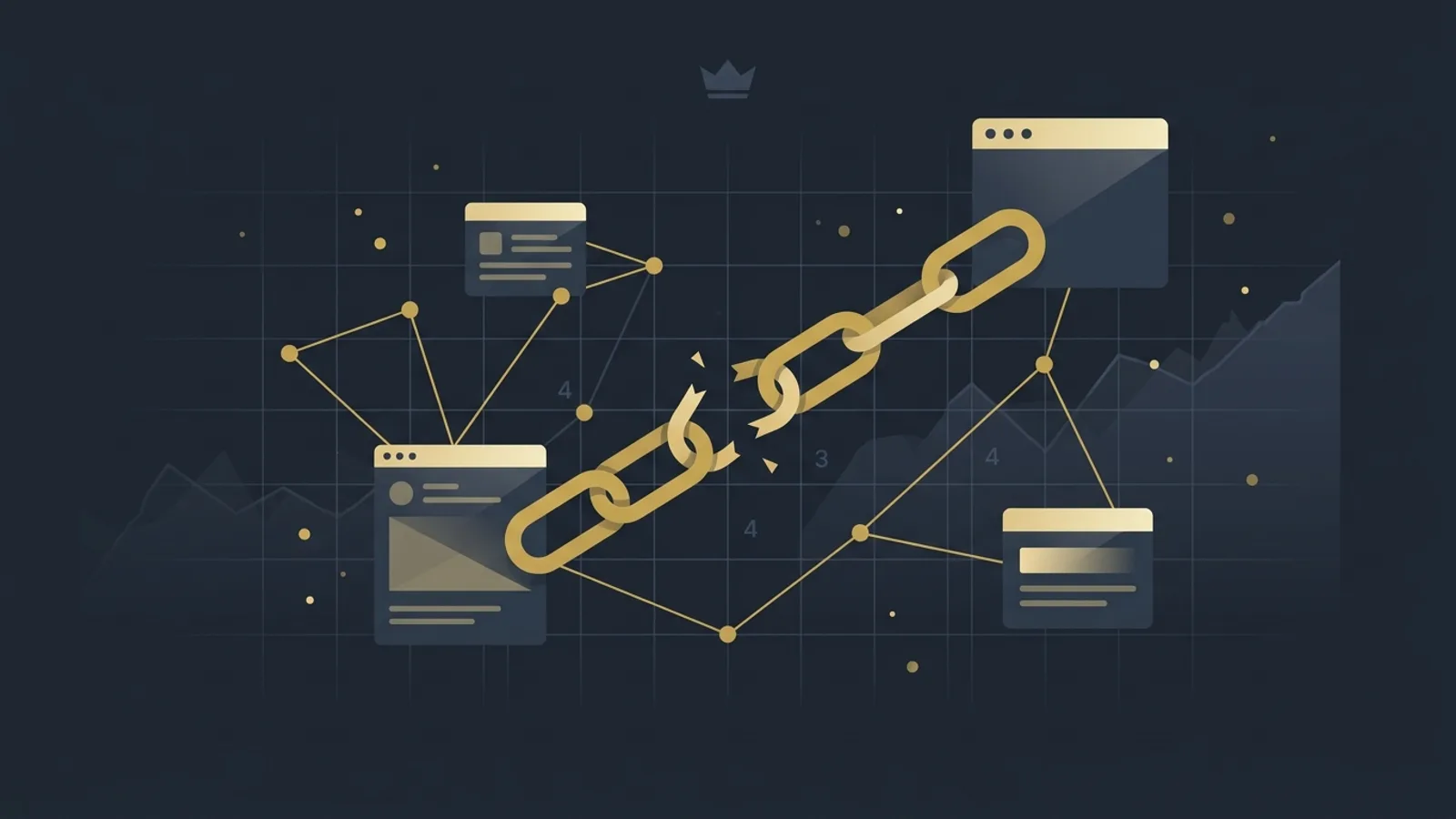
Broken link building is a white-hat link building technique where you find broken (404) outbound links on other websites, create replacement content that matches what the dead link originally pointed to, and then reach out to the site owner suggesting they replace the broken link with a link to your content. It works because you are helping webmasters fix a problem on their site while earning a quality backlink in return.
This strategy was popularized by Brian Dean of Backlinko and consistently ranks among the most effective link building tactics. According to an Ahrefs study, 66.5% of links to websites in their index are broken. That represents millions of broken link opportunities across every niche. The response rate for broken link outreach typically ranges from 5-15%, significantly higher than cold outreach for guest posts (1-5%). For background context, see the reference at backlink.
The beauty of broken link building is the win-win nature of the approach. The webmaster gets a fixed user experience, you get a backlink, and users get access to valuable content instead of a 404 error. This makes it one of the most sustainable link building strategies available, as it creates genuine value for all parties involved.
Pro Tip: When working on what is broken link building?, start with the highest-impact items first and track your progress over time to measure improvements.
Finding Broken Links
There are several proven methods for finding broken link opportunities at scale. The most efficient approach is to use Ahrefs' Broken Backlinks report: enter a competitor's domain and filter for 404 pages that still have referring domains pointing to them. Each broken page with multiple backlinks represents a single piece of replacement content that could earn you dozens of links.
For a free approach, use the Check My Links Chrome extension to scan resource pages in your niche. Navigate to pages titled "Resources," "Useful Links," or "Recommended Tools" and run the extension - it highlights all broken links in red. You can also use Screaming Frog to crawl an entire website and filter for outbound links returning 404 status codes.
- Search Google for "[your niche] + resources" or "[your niche] + useful links" to find link-heavy pages
- Use Ahrefs Content Explorer to find pages in your niche with the most referring domains, then check for broken outbound links
- Monitor competitor domains that shut down or rebrand - all their old backlinks become broken link opportunities
- Use Rank Crown's backlink analysis to identify broken links pointing to competitors in your vertical
Evaluating Opportunities
Not all broken link opportunities are worth pursuing. Evaluate each prospect based on three factors: the authority of the linking page (DR/DA 30+ is ideal), the relevance of the linking site to your niche, and the number of other sites also linking to the same dead resource (more referring domains means more potential outreach targets from a single piece of replacement content).
Use the Wayback Machine (web.archive.org) to check what the dead page originally contained. This tells you exactly what kind of replacement content to create. If the original resource was a comprehensive guide, your replacement needs to be equally comprehensive - or better. If it was a tool or calculator, you may need to build a functional alternative, which requires more effort but earns higher-quality links.
- Prioritize dead resources with 10+ referring domains - one piece of content can earn many links
- Check anchor text distribution to understand what the linking sites expected the resource to cover
- Skip opportunities where the dead page was thin content, a sales page, or irrelevant to your expertise
Pro Tip: When working on evaluating opportunities, start with the highest-impact items first and track your progress over time to measure improvements.
Creating Replacement Content
Your replacement content must match or exceed the quality and scope of the original dead resource. Use the Wayback Machine snapshot as your baseline, then improve upon it with updated statistics, better visuals, additional sections, and more comprehensive coverage. The goal is to make your replacement so clearly superior that webmasters have no reason to hesitate linking to it.
When creating the replacement, match the content format of the original. If the dead page was a list of tools, create a more comprehensive and updated list. If it was a research study, create a more current analysis. Add original data, expert quotes, or interactive elements that make your version uniquely valuable. This "Skyscraper" approach to replacement content dramatically increases your outreach success rate.
Publish your replacement content before starting outreach. Link to it internally from relevant pages on your site, share it on social media to generate initial engagement signals, and ensure it is fully indexed in Google. When you reach out to webmasters, they should find a polished, live resource that they can immediately verify as a quality replacement.
Outreach Strategy
Your outreach email should be concise, helpful, and specific. Lead with the value you are providing (alerting them to a broken link on their site), specify the exact URL and anchor text of the broken link so they can find it easily, and suggest your replacement resource. Keep the email under 150 words and avoid generic templates that sound mass-produced.
A proven outreach template: "Hi [Name], I was reading your [page title] and noticed the link to [dead resource name] in the [section name] section is no longer working. I recently published a similar resource at [your URL] that covers [brief description]. It might make a good replacement. Either way, thought you'd want to know about the broken link. Cheers, [Your name]."
- Personalize each email - reference the specific page and section where the broken link appears
- Send one follow-up after 5-7 days if no response, then move on
- Use tools like Hunter.io or Voila Norbert to find the right contact email for each site
- Track outreach in a spreadsheet: date sent, follow-up date, response status, link placed
Pro Tip: When working on outreach strategy, start with the highest-impact items first and track your progress over time to measure improvements.
Scaling the Process
To scale broken link building, build systems for each stage of the process. Use Ahrefs or Rank Crown to set up automated monitoring for newly broken links in your niche. Create a spreadsheet or CRM (Pitchbox, BuzzStream) to track prospects, outreach status, and success rates. Batch your work: spend one day finding opportunities, another creating content, and another on outreach.
As you scale, track your key metrics: emails sent per week, response rate, link placement rate, and cost per link acquired. A healthy broken link building campaign converts at 5-15% (emails to links placed). If your rate drops below 3%, revisit your outreach templates and content quality. Aim for 10-20 quality links per month from this strategy alone once your systems are running smoothly.
Consider hiring a virtual assistant to handle the prospecting and initial outreach phases, while you focus on content creation and relationship building. The prospecting and outreach steps are process-driven and can be documented in SOPs, making them ideal for delegation. This allows you to run broken link campaigns continuously without consuming all your time.
Frequently Asked Questions
What is the main focus of Broken Link Building?
Broken link building focuses on finding dead (404) links on other websites, creating superior replacement content, and reaching out to site owners to suggest your content as a replacement. It is a white-hat link building strategy with typical response rates of 5-15%, making it one of the most effective approaches for earning quality backlinks.
How long does it take to see results?
You can start earning links within 2-4 weeks of launching your first outreach campaign. Each placed link typically takes 1-3 weeks from initial outreach to publication. However, the SEO impact of those new backlinks on your rankings usually takes 4-8 weeks to materialize. Plan for a 3-month ramp-up period to build consistent results.
Do I need expensive tools?
You can start for free using the Check My Links Chrome extension to find broken links on resource pages, and the Wayback Machine to analyze dead content. For scaling, tools like Ahrefs ($129/mo) or Rank Crown help find broken link opportunities across entire domains. Outreach tools like Hunter.io have free tiers for finding contact emails. A full toolkit costs $100-200/month but can earn links worth $200-500 each.
Is this guide suitable for beginners?
Yes, broken link building is actually one of the best link building strategies for beginners because the process is straightforward and repeatable. This guide walks you through each step from finding broken links to writing outreach emails, with specific tools and templates at each stage. No prior link building experience is required.
Related Resources
SEO Tool Comparison at a Glance
Choosing the right toolkit depends on your budget and the part of SEO you optimize most often. The table below summarizes how Rank Crown compares to the main alternatives covered across our resources.
| Tool | Starting Price | Free Plan | Best For |
|---|---|---|---|
| Rank Crown | $39/mo | Yes | Focused rank tracking + audits without bloat |
| Ahrefs | $129/mo | Limited | Backlink intelligence and large databases |
| Semrush | $139.95/mo | Limited | All-in-one for agencies combining SEO and PPC |
| Moz Pro | $99/mo | Limited | Beginner-friendly metrics like Domain Authority |
| SE Ranking | $65/mo | No | Budget-friendly tracking with white-label reports |
| Mangools | $29.90/mo | No | Lean keyword research workflow |
Prices verified 2026-05-20 from each vendor's public pricing page. Annual billing typically discounts these figures further.
Ready to Improve Your SEO?
Try Rank Crown's SEO tools to analyze, track, and optimize your website's search performance.
Start Free Trial