What SEO Stands For and Why It Matters
SEO stands for Search Engine Optimization. It is the process of making your website more visible in organic (non-paid) search results on engines like Google, Bing, and Yahoo. When someone types a query into Google and clicks a result - that's organic traffic, and SEO is what drives it. For background context, see the reference at Search Engine Optimization (Wikipedia).
Consider this: Google processes over 8.5 billion searches per day. The first result on a Google search page gets around 30% of all clicks. The second result gets about 15%. By the time you reach page two, traffic drops to nearly zero. SEO is how you move from page two - where nobody goes - to position one, where customers are waiting.
Unlike paid advertising (where traffic stops the moment your budget runs out), SEO builds long-term, compounding visibility. A well-ranked article you publish today can drive traffic for years, with zero ongoing ad spend. That's the core appeal - and the reason SEO remains one of the highest-ROI digital marketing channels for most businesses.
Key Takeaway
SEO is the practice of earning free, sustainable traffic from search engines. Unlike paid ads, it compounds over time - a top-ranking page keeps generating traffic indefinitely without paying per click.
How Search Engines Work
To optimize for search engines, you need to understand what they actually do. Search engines operate in three distinct phases: crawling, indexing, and ranking.
1. Crawling - Discovering Content
Search engines deploy automated programs called "crawlers" or "spiders" (Google's is called Googlebot) that browse the web by following links from page to page. When a crawler visits your site, it reads the HTML, follows internal links to discover new pages, and queues them for indexing. Pages blocked by robots.txt or with no inbound links are often never discovered.
What this means for you: Make sure your important pages are linked to from elsewhere on your site. A page that exists but has no links pointing to it is essentially invisible to crawlers - a condition called an "orphan page."
2. Indexing - Storing and Understanding Content
After crawling, the search engine processes each page's content, analyzes its meaning using Natural Language Processing (NLP), and stores it in a massive database called the index. Think of the index as a giant library catalog. When you search for something, Google doesn't search the entire web in real-time - it searches its index.
What this means for you: Content must be readable by search engines. Avoid putting critical content only inside JavaScript renders that crawlers can't execute, and don't block your CSS or JS files in robots.txt, as Google needs them to understand how your page renders.
3. Ranking - Determining the Best Results
When a user searches, Google's algorithm evaluates hundreds of signals to determine which indexed pages best answer the query, then orders them by relevance and authority. Google's algorithm uses over 200 ranking factors, though the most heavily weighted include content relevance and quality, backlink authority, page experience (speed, Core Web Vitals), and user signals (CTR, dwell time).
What this means for you: SEO is not about gaming a single factor. It requires a balanced approach - strong content, credible backlinks, and a technically sound site that loads fast and works on mobile.
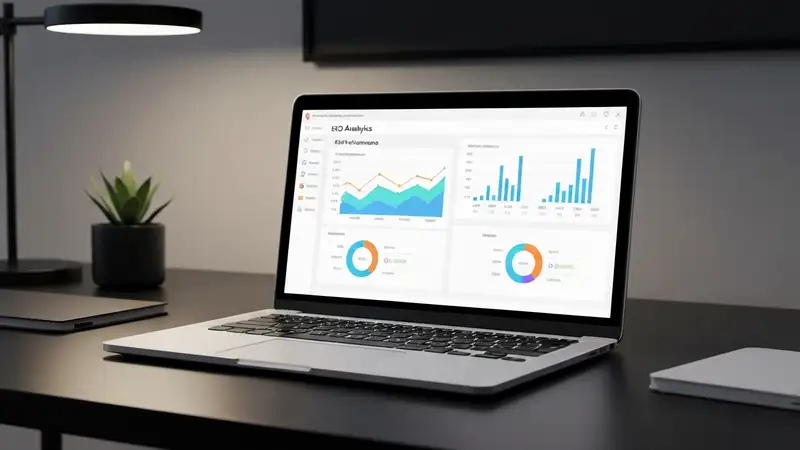
The Three Pillars: On-Page, Off-Page, Technical SEO
SEO is commonly divided into three interconnected disciplines. Excelling at all three is what separates sites that dominate page one from those stuck on page five.
Pillar 1
On-Page SEO
Everything you do directly on your web pages: title tags, meta descriptions, heading structure (H1/H2/H3), keyword usage, content quality, image alt text, internal linking, and URL structure. On-page SEO is entirely within your control.
Pillar 2
Off-Page SEO
Actions taken outside your website to build authority: acquiring backlinks from other sites, digital PR, brand mentions, social signals, and guest posting. Off-page SEO is largely about building your site's reputation on the broader web.
Pillar 3
Technical SEO
The infrastructure of your site: page speed, Core Web Vitals, mobile-friendliness, HTTPS, structured data (schema), XML sitemaps, canonical tags, crawl budget management, and fixing errors like broken links and redirect chains.
A common mistake beginners make is focusing exclusively on one pillar. If you write brilliant content (on-page) but have a slow website (technical) and no backlinks (off-page), you will struggle to rank against competitors who have all three. Think of them as legs of a stool - remove one and the whole structure becomes unstable.
Key SEO Metrics You Need to Track
You can't manage what you don't measure. These are the core SEO metrics every practitioner should monitor:
Organic Traffic
The number of visitors arriving from non-paid search results. This is the ultimate measure of SEO success. Track it in Google Analytics (GA4) by filtering sessions to the 'Organic Search' channel.
Keyword Rankings
The position your pages appear in for target keywords. Tracking ranking changes over time reveals whether your SEO efforts are working or if competitors are outpacing you. Use Rank Crown's rank tracking to monitor this daily.
Domain Rating / Domain Authority
Third-party scores (Rank Crown uses Domain Rating, or DR) that estimate your site's overall link authority on a 0–100 scale. Higher DR generally correlates with better ranking ability. It's built primarily from the quality and quantity of your backlink profile.
Click-Through Rate (CTR)
The percentage of users who click your result after seeing it in search. A page ranking #3 with a 12% CTR outperforms a page at #1 with a 5% CTR. Optimize title tags and meta descriptions to improve CTR. Monitor this in Google Search Console.
Referring Domains
The number of unique websites linking to yours. This is more meaningful than raw backlink count - 100 links from 100 different sites is far more valuable than 100 links from the same site. Track your referring domains in Rank Crown's Site Explorer.
Core Web Vitals
Google's page experience metrics: Largest Contentful Paint (LCP, loading speed), Interaction to Next Paint (INP, responsiveness), and Cumulative Layout Shift (CLS, visual stability). Failing Core Web Vitals can suppress rankings even with strong content.

SEO vs PPC - When to Use Each
SEO and PPC (Pay-Per-Click advertising, like Google Ads) both put you in front of search engine users, but they work very differently. Understanding when to use each - or both - is a foundational business decision.
SEO - Organic
- Traffic is free per click
- Results compound and persist
- Builds long-term brand authority
- Requires 3–12 months to see results
- Higher trust from users (organic results)
- Best for: content, brand building, long-term growth
PPC - Paid
- Instant visibility once ads go live
- You pay for every click
- Traffic stops when budget stops
- Highly targetable (demographics, intent)
- Ideal for promotions and testing
- Best for: launches, high-intent buyers, time-sensitive offers
The Smart Play: Use Both
Run PPC to get immediate traffic and revenue while SEO builds in the background. Use PPC data (which keywords convert) to inform your SEO content strategy. Over time, as organic rankings improve, you can reduce PPC spend - letting organic traffic carry a larger share of acquisition with no marginal cost per click.
How Long Does SEO Take to See Results?
This is the most common question beginners ask - and the honest answer is: it depends. Here's a realistic timeline based on typical site scenarios:
Technical fixes, site audit, keyword research, content planning. Google begins discovering your updated and new pages. Little to no visible ranking movement yet.
Google indexes your new content. Long-tail keywords begin appearing in Search Console. Some ranking movement on low-competition queries. Traffic uptick of 15–30% over baseline.
Mid-competition keywords start ranking on page 2–3. Backlink building efforts begin to show domain authority gains. Compounding traffic growth as new content is published regularly.
Target keywords reach page one for many queries. Organic traffic becomes a reliable, primary channel. Competitive keywords remain a work in progress - those can take 12–24 months for new domains.
Factors that accelerate results include: starting with a domain that has some existing authority, targeting low-competition keywords first, publishing high-quality content consistently, and actively building backlinks. Factors that slow results include: targeting only highly competitive keywords from day one, ignoring technical issues, and publishing thin or low-quality content.
Getting Started with SEO
The best SEO strategy is the one you actually execute. Here's a concrete action plan for beginners in 2026:
Audit your existing site
Before creating new content, understand what you already have. Use Rank Crown's Site Explorer to see your current organic traffic, which pages rank, and your backlink profile. Identify technical errors - broken links, missing titles, slow pages - and fix those first. You can't build on a broken foundation.
Do thorough keyword research
Identify the terms your target audience searches for. Use Rank Crown's Keywords Explorer to find keywords with a balance of search volume and low-to-medium difficulty. Beginners should prioritize long-tail keywords (3+ words, specific intent) where competition is lower and ranking is achievable within months rather than years.
Create content that genuinely answers the search intent
For every keyword you target, ask: what does the searcher actually want? If they search 'best running shoes for beginners', they want a comparison - not a 5,000-word history of running shoes. Match your content format and depth to the search intent. Comprehensive, well-structured content with clear sections and actionable advice outperforms thin pages.
Build backlinks strategically
Identify link-worthy angles in your content (original data, unique perspectives, comprehensive guides) and promote them to relevant blogs, journalists, and industry sites. Guest posting on reputable sites in your niche is one of the most reliable link-building tactics. Analyze your competitors' backlink sources using Rank Crown's Backlink Analysis to find the same opportunities for yourself.
Track, measure, and iterate
Set up Google Search Console and Google Analytics 4 immediately - they're free and essential. Use Rank Crown to monitor your keyword rankings and backlink growth over time. SEO is iterative: publish, observe how pages rank, update underperforming content, and double down on what's working.
AI-Influenced SEO in 2026
The biggest shift in search over the past two years is how answers reach people. Google now shows AI Overviews above the classic blue links for a large share of informational queries, and tools like ChatGPT, Perplexity, and Gemini answer questions without a user ever visiting a website. This does not make SEO obsolete. It changes what winning looks like. Instead of optimizing only to rank, you now optimize to be the source an AI system quotes when it builds its answer.
That practice has picked up a few names: Generative Engine Optimization (GEO) and Answer Engine Optimization (AEO). Both describe the same goal. Make your content so clear, well-structured, and credible that a language model can lift a clean, accurate passage from it and attribute the answer to you. The good news for anyone learning SEO in 2026 is that the foundations have not changed. AI systems still pull from indexed pages, still weigh authority and relevance, and still favor content that genuinely answers the question. Strong traditional SEO is the entry ticket to AI visibility, not a separate game.
Answer-first writing
Lead each section with a direct, self-contained answer before the supporting detail. AI systems prefer passages that stand on their own. A clear two-sentence definition near the top of a section is far more likely to be quoted than the same idea buried in paragraph six.
Structure and schema
Clean headings, short paragraphs, lists, tables, and structured data help both crawlers and language models parse your meaning. FAQ and How-To schema make individual answers easy to extract and cite.
E-E-A-T and real sources
Experience, Expertise, Authoritativeness, and Trust matter more than ever because AI systems prefer sources they can stand behind. Cite primary data, name your authors, and link to credible references. Pages that read like genuine expertise outperform thin, generic content.
Brand and entity signals
Branded search demand, consistent mentions across the web, and a well-defined entity profile increasingly influence which sources AI engines trust. Building a recognizable brand is now an SEO activity, not just a marketing one.
A practical way to think about it: optimize once, win twice. The same work that earns a top organic position, namely thorough keyword research, solid on-page optimization, and a fast, crawlable site backed by good technical SEO, is also what makes your content quotable inside AI Overviews and chat answers. You do not need a separate AI strategy. You need disciplined SEO that produces clear, sourced, well-structured pages.
What to do this quarter
Audit your best-performing pages and add a crisp answer paragraph near the top of each major section. Add or refresh FAQ schema. Make sure your strongest claims link to a real source. Then track whether those pages start appearing in AI Overviews and earning more impressions for question-style queries.
How Rank Crown Helps With SEO Analysis
Understanding SEO is one thing. Measuring it is another. Rank Crown brings the core analysis you need into a single dashboard, so you can move from theory to action without juggling half a dozen tools. Here is how each module maps to the concepts in this guide.
Site Explorer for the full picture
Check any domain's estimated organic traffic, Domain Rating, ranking keywords, and backlink profile in seconds. Use it to benchmark your own site and to study what is working for competitors.
Keywords Explorer for opportunity sizing
Find terms with the right balance of search volume and difficulty, then prioritize the long-tail queries you can realistically win. Pair it with the keyword research guide to turn raw data into a content plan.
Site Audit for technical health
Surface broken links, missing titles, slow pages, and Core Web Vitals issues so you can fix the technical foundation before investing in content. This is the practical side of the technical SEO pillar.
Rank Tracker to prove progress
Monitor your target keywords over time and watch positions improve as your SEO compounds. Tracking is what turns SEO from guesswork into a measurable, reportable channel.
The workflow is simple. Audit, research, optimize, track, repeat. Rank Crown is built to support that loop without the enterprise price tag, which makes it a sensible starting point for beginners and small teams who want real data behind their decisions.
Related Resources
Ready to Analyze Your Site?
Put your SEO knowledge to work immediately. Rank Crown's Site Explorer gives you a complete picture of your site's organic performance - traffic estimates, keyword rankings, backlink profile, and competitor comparison - all in one dashboard.
SEO Tool Comparison at a Glance
Choosing the right toolkit depends on your budget and the part of SEO you optimize most often. The table below summarizes how Rank Crown compares to the main alternatives covered across our resources.
| Tool | Starting Price | Free Plan | Best For |
|---|---|---|---|
| Rank Crown | $39/mo | Yes | Focused rank tracking + audits without bloat |
| Ahrefs | $129/mo | Limited | Backlink intelligence and large databases |
| Semrush | $139.95/mo | Limited | All-in-one for agencies combining SEO and PPC |
| Moz Pro | $99/mo | Limited | Beginner-friendly metrics like Domain Authority |
| SE Ranking | $65/mo | No | Budget-friendly tracking with white-label reports |
| Mangools | $29.90/mo | No | Lean keyword research workflow |
Prices verified 2026-05-20 from each vendor's public pricing page. Annual billing typically discounts these figures further.
Frequently Asked Questions
How long does SEO take to show results?
Most sites see meaningful organic traffic growth between 3-6 months. Competitive niches require 9-12 months. Brand-new domains in a fresh competitive space can take 12-18 months before reaching meaningful traffic.
Is SEO better than paid ads?
They serve different purposes. SEO compounds over time and brings free traffic once you rank, but is slow. Paid ads deliver instant visibility but stop when the budget stops. Most mature brands run both.
Can I do SEO myself?
Yes, especially for local and small-business sites. Free tools (Google Search Console, Google Analytics) and beginner-friendly platforms (Rank Crown, Mangools) provide enough data to get started. Larger sites benefit from in-house specialists or agencies.
What are the most important SEO ranking factors?
High-quality content matched to search intent, backlinks from authoritative sites, technical performance (Core Web Vitals, indexability), on-page optimization, and topical authority. Brand search demand is increasingly important.
Does SEO still matter in the age of AI search?
Yes. Generative search and AI overviews still rely on traditional ranking signals to choose source pages. Strong SEO now drives both classic blue links and AI citations, which is why E-E-A-T and structured content are more important than ever.